Lycopene
Lycopene gives the aril much of its deep red colour. It is a dietary carotenoid studied for its antioxidant activity.
THE FRUIT BEHIND THE FEED ADDITIVE
Gac is a fruit grown in Vietnam. PVN Harvest grows and exports its own gac fruit. Its bright red centre contains natural colour compounds called carotenoids.
01 / THE FRUIT
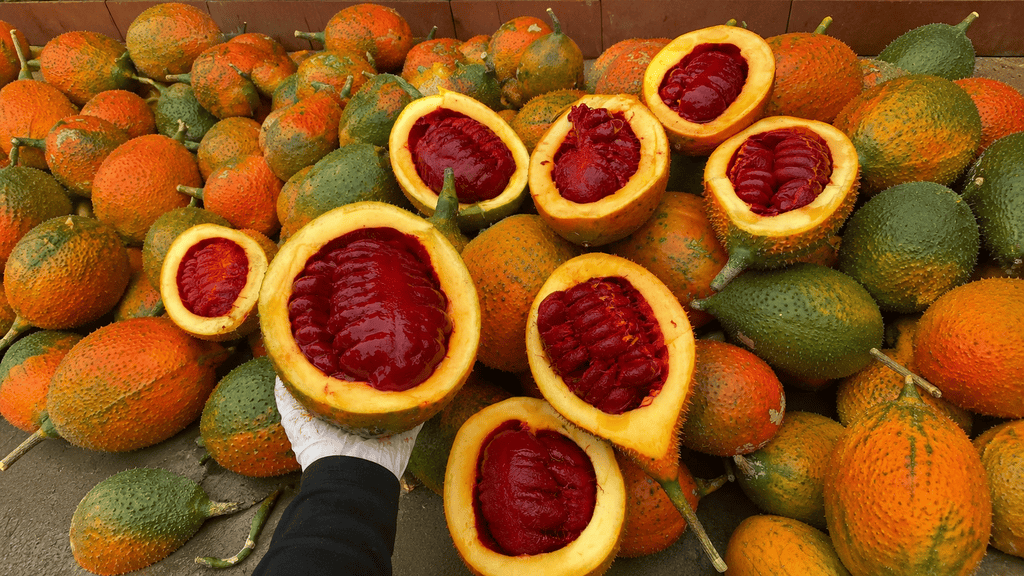
The botanical name is Momordica cochinchinensis. Gac grows on a vine and is used as a food in Southeast Asia.
When ripe, the fruit has a spiky orange skin. Inside are seeds covered by a deep red, oily layer called the aril. That aril is the part best known for lycopene and beta-carotene.
PVN Harvest grows and exports its own gac fruit from Vietnam. We supply gac ingredients for animal feed and other product formulations.
02 / WHAT IS INSIDE
A National Institute for Food Control report measured four carotenoids in one frozen gac fruit pulp sample.
Lycopene
Beta-carotene
Astaxanthin
Zeaxanthin
Frozen gac fruit pulp, one sample. National Institute for Food Control, test period 26 March to 11 April 2026. Values shown in the units on the report.
Lycopene gives the aril much of its deep red colour. It is a dietary carotenoid studied for its antioxidant activity.
The body can turn beta-carotene into vitamin A. Vitamin A supports normal vision and immune function.
Zeaxanthin is one of the carotenoids found in the central part of the retina. It is studied for its role in eye health.
Gac fruit contains beta-carotene that the body can use to make vitamin A, which supports normal vision and immune function. The tested pulp also contained zeaxanthin. Zeaxanthin is part of the pigment in the central retina. Lycopene and astaxanthin are carotenoids studied for antioxidant activity.
Read the NIH vitamin A guide, National Eye Institute information on zeaxanthin, a gac composition study, and astaxanthin research.
03 / COMPARE THE FRUIT
Gac is sometimes called a superfood. Tomatoes and carrots are familiar sources of carotenoids. Gac brings their two best known carotenoids together in its red aril.
The red carotenoid many people know from tomatoes.
The orange carotenoid many people know from carrots.
The red aril contains lycopene and beta-carotene, plus its own natural oil.
In a simulated digestion study, carotenoids from gac aril were more available for absorption than those from tomato and carrot samples. This was a study of the fruit, not a comparison of finished supplements or eggs.
Read the studyGAC FRUIT QUESTIONS
Gac, or Momordica cochinchinensis, is a fruit grown on a vine in Southeast Asia. Its ripe fruit has an orange skin and red arils around the seeds.
Gac contains carotenoids such as lycopene and beta-carotene. These compounds are studied for antioxidant activity. The amount depends on the fruit and how it is processed.
Superfood is a marketing term, not a scientific food category. We focus on the carotenoids measured in gac and on the form supplied for each use.
Yes. Gac powder can be added as an ingredient to a complete feed formula. PVN Harvest is currently focused on trials with layer producers.
04 / PRODUCT FORMS
Gac powder can be used as an animal feed additive. Layer feed is our current application focus. Gac can also be formulated for human food and supplements.
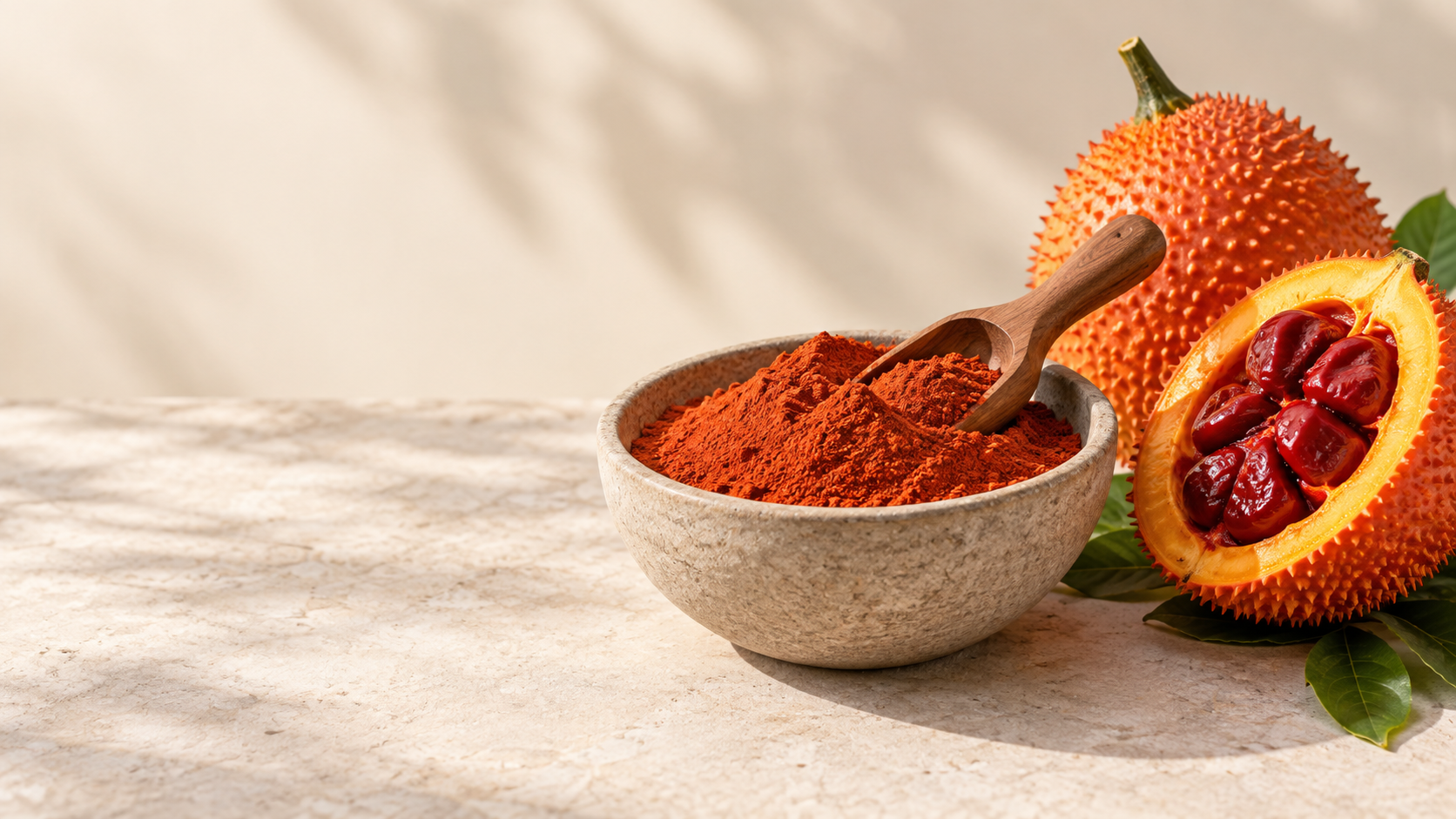
A powder ingredient for feed teams to add at a chosen percentage to complete feed. Our current focus is layer feed.
Request a layer feed trialHUMAN FOOD AND SUPPLEMENT FORMATS
Oil from the red aril for capsules, drops or other supplement formulas.
A convenient format designed to dissolve before or during use.
A soft food or supplement format built around gac ingredients.
These are possible product formats. Ask us about the current ingredient range and supply options.